
By Final Rentals | Dubai & Doha Operations Team
The Middle East is experiencing record air traffic, yet flight access is increasingly restricted. Rising geopolitical tensions under “Operation Epic Fury” are placing immense pressure on the Gulf Cooperation Council (GCC) aviation network. Major airports such as Dubai International (DXB), Abu Dhabi (AUH), and Hamad International in Doha are facing temporary shutdowns, flight rerouting, and extensive delays.
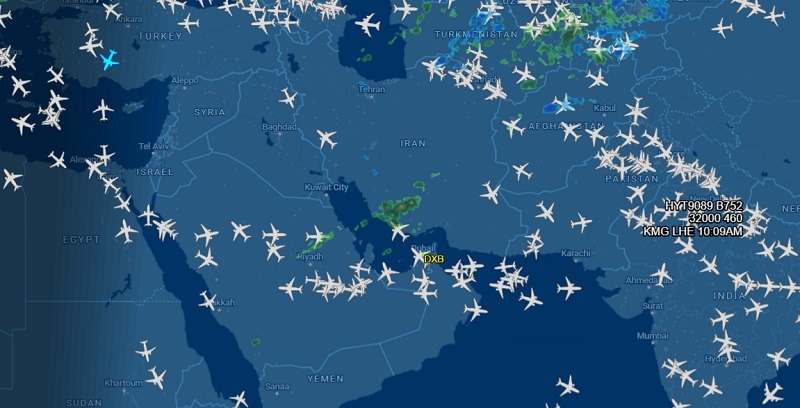
Image Courtesy: Flight Aware, March 03, 2026
Over one million travellers in the region are frequently told by airlines to wait. Being confined to an airport terminal or hotel lobby without control over your journey can create both stress and logistical challenges. As a global car rental provider operating on the ground in Dubai and Qatar, Final Rentals monitors not only flight activity but also traffic on Sheikh Zayed Road and border crossings across the GCC.
When air travel is uncertain, the road provides a reliable alternative. Travellers must consider mobility, safety, and flexibility in these conditions. This includes cross-border ground travel, retaining control when stranded, understanding insurance coverage in conflict zones, utilising flexible booking options, and planning for expatriate evacuation.
Airspace disruptions have hit suddenly. In the past 72 hours, almost 40% of flights between the UAE, Saudi Arabia, and Oman were delayed or cancelled due to security alerts, making reliance on air travel alone increasingly risky.
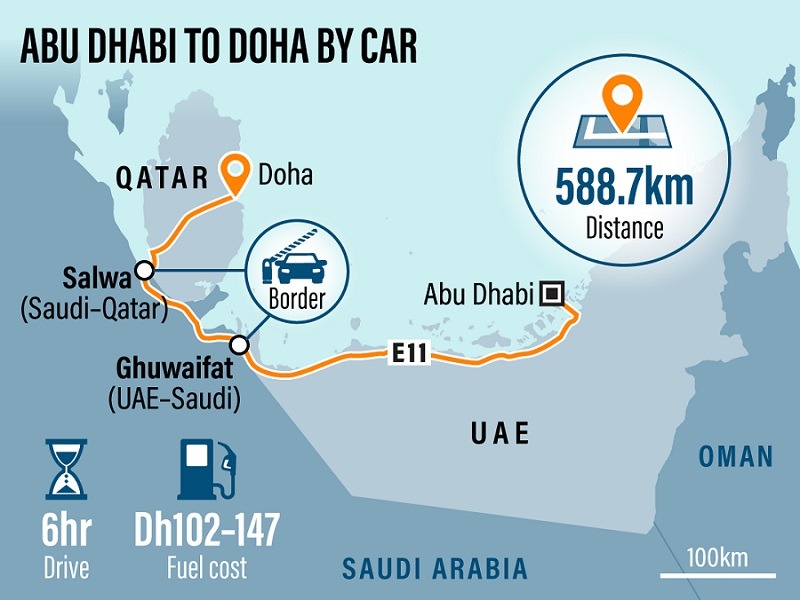
Here, long-term car rentals in the UAE (30+ days) become essential. The GCC road network is among the most advanced worldwide, with Dubai to Muscat, Oman taking around 4.5 hours via the Hili Border, and Dubai to Dammam, Saudi Arabia taking roughly 6 hours. While airspace may close, land borders generally remain open for travellers with the correct visas and documentation.
For those stranded in Dubai with cancelled flights, a rental vehicle provides the option to reach an operational airport. If Doha faces restrictions, driving to hubs in Oman or southern Saudi Arabia may be the only path for onward travel to Europe or Asia.
Planning is critical. Short-term daily rentals often impose mileage caps and insurance restrictions that do not cover cross-border travel. Final Rentals’ long-term fleet offers GPS tracking, emergency roadside assistance across GCC borders, and all required vehicle registration documents (Mulkiya) for customs clearance.
We do not advise travel into conflict zones, but the GCC highway network ensures access to functional airports.
The disruption extends beyond flights, leaving over 30,000 German tourists and 58,000 Indonesian pilgrims stranded in hotels, cruise terminals, and airport lounges. The most overlooked consequence is the loss of agency. Waiting for airline decisions can be stressful, particularly for families, elderly travellers, and tourists unfamiliar with the region.
A “Safe Harbour” rental offers both practical and psychological relief. With a private vehicle, travellers can leave their hotel, buy essential supplies, move to quieter areas, and avoid crowded districts without relying on public transport. For larger groups, multiple rental vehicles also make it easier to travel to consulates or designated assembly points.
Independent travellers regain control, turning passive waiting into proactive mobility. Final Rentals prioritises SUVs and larger vans for families or groups needing to stay together.
Many customers wonder, “Am I responsible if my rental is damaged during a regional conflict?” Standard rental agreements and insurance policies typically exclude coverage for “Acts of War,” “Civil Commotion,” or “Force Majeure.” Normally, these clauses are fine print, but under “Operation Epic Fury,” they are highly relevant.
Most insurance policies exclude damage from direct military action, terrorism, or nuclear events. The UAE and Qatar, however, remain safe for everyday travel. Typical risks to rental vehicles come from congestion, panic driving, or abandoned vehicles. Final Rentals has implemented a Crisis Coverage Protocol:
Customers are encouraged to consider our Premium Protection Package, which reduces deductibles to zero for non-war-related incidents and provides 24/7 support. Claims are handled individually with the goal of assisting travellers.
Government advisories, including those from the UK Foreign Office and US State Department, recommend avoiding airports unless flights are confirmed. To address this, Final Rentals offers a Zero-Penalty Crisis Policy for pickup in Qatar, the UAE, or Saudi Arabia:
This policy removes financial risk, allowing travellers to plan mobility with confidence.
The Gulf is home to hundreds of thousands of Western and Asian expatriates. Evacuation plans may involve ports, airports, or military zones, and public transport is often unreliable. Private vehicles are critical. Final Rentals provides comprehensive evacuation support:
For British citizens or other travellers without cars, pickup in Qatar or the UAE provides a vital link between home and safety. Reservations are prioritised for verified evacuees.
Over one million travellers in the Middle East are affected by flight delays, rerouting, or uncertainty. Air travel is centralised and vulnerable; road travel is decentralised and adaptive. As a global car rental provider, Final Rentals ensures mobility through cross-border and long-term car rentals in the UAE, offers clear insurance guidance, and delivers flexible, zero-penalty bookings to keep travellers safe and mobile.
You cannot control geopolitical events, but you can control how prepared you are. In uncertain times, flexibility matters more than speed, and it starts with being able to travel on your own terms.
Stay Safe. Stay Mobile.
The Final Rentals Team
Dubai | Doha | Riyadh