
Renting a vehicle in Grenada provides an unparalleled level of freedom that organised tours can't offer. Saint George Parish, the island's administrative and commercial centre, serves as the primary gateway for visitors arriving via Maurice Bishop International Airport or the cruise terminal at the Esplanade.
Saint George Parish showcases a captivating mix of historic colonial charm and modern development, featuring narrow streets around the Carenage and the bustling Maurice Bishop Highway. Its volcanic landscape features steep gradients and dramatic coastal cliffs that can be exhilarating yet challenging for tourists.
With a car, you can easily transition from the lush interior to the stunning coastline, allowing you to explore the authentic Spice Isle at your own pace without being confined to a strict itinerary. This guide provides you with essential knowledge to drive confidently like a local, ensuring a safe and memorable journey through this Caribbean paradise.
Having a valid driving licence from your home country is necessary, but it is not sufficient to legally drive in Grenada. Every tourist driver must obtain a temporary Grenadian driving permit. This document is government-mandated and must be presented alongside your national licence if you are stopped by the Royal Grenadian Police Force.
Fortunately, the process of acquiring this permit is remarkably easy. Most reputable car rental agencies in Saint George are authorised to issue it when you pick up your vehicle. The permit is typically valid for 3 months and costs approximately 60 East Caribbean Dollars, which is roughly 22 US Dollars.
While the roads in the southern part of Saint George Parish are generally well-paved, those leading up to Richmond Hill or the steep ascent to Fort Frederick are famously demanding. A standard economy sedan may struggle with the incline. Furthermore, the island’s infrastructure includes high-speed bumps and deep drainage gutters designed to handle heavy tropical rainfall, which can easily scrape the undercarriage of a low-riding car.
For these reasons, it is highly recommended to opt for an SUV or a 4x4 vehicle. The higher ground clearance provides a buffer against road hazards, while the extra torque makes climbing the volcanic ridges much more manageable. Even if you do not plan on doing any off-road driving, the added visibility provided is an enormous advantage.
Grenada adheres to the British system of driving on the left-hand side of the road, which might be unfamiliar to many tourists. Always remember that the driver should always be positioned toward the centre of the road. This perspective helps maintain your lane discipline, especially when navigating the tight corners common in the hills above the capital.
If you are unaccustomed to driving on the left, practice in the open and flat areas surrounding the airport before venturing into the more congested parts of the parish. Pay particular attention during right-hand turns, as this is when the instinct to drift into the right lane is strongest. It is often helpful to have a passenger act as a second pair of eyes to remind you to stay left when exiting car parks or gas stations.
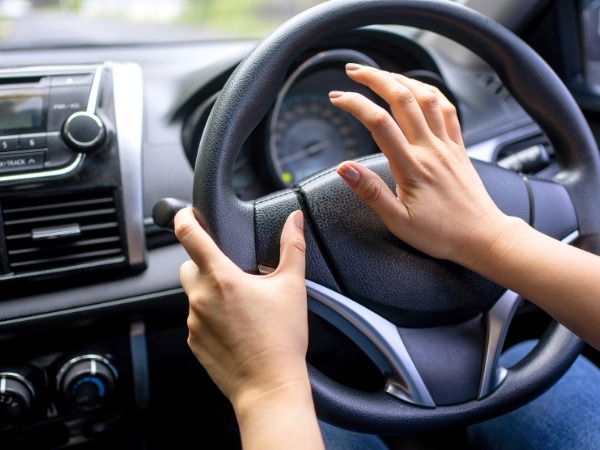
In Grenada, the car horn is an essential communication tool used to give signals and facilitate the flow of traffic. Understanding this local language is key to immersing yourself in the driving culture. A quick, light double-tap of the horn is most often used to say thank you when someone lets you merge, or to signal your appreciation when a driver pulls over to let you pass on a narrow stretch.
The horn is also a vital safety feature when navigating the winding hills of the parish. Many roads in the residential areas above the Carenage are only wide enough for one vehicle. When approaching a blind corner where you cannot see oncoming traffic, a short blast of the horn alerts other drivers to your presence. This allows both parties to slow down and find a suitable passing point.
Roundabouts are a common feature of the road network in Saint George, particularly along the Maurice Bishop Highway and near the entrance to the city. For many visitors, they can be a point of confusion. Entering a roundabout without checking for oncoming vehicles is one of the most common causes of minor accidents for tourists. It is important to remember that you must always yield to traffic already inside the circle approaching from your right.
When you approach a roundabout, stay in the correct lane for your intended exit. Use your indicators clearly to signal your intentions to other drivers; signal left if you are taking the first exit, and signal right if you are going more than halfway around the circle. As you pass the exit prior to the one you want, switch your signal to the left to indicate you are leaving the roundabout.
As the primary tourist hub, the Grand Anse area experiences the highest volume of traffic in the parish. During peak hours, which typically fall between 8:00 AM and 9:00 AM and 4:00 PM and 5:00 PM, the main coastal road can become quite congested. If you are planning a trip to the beach or a dinner reservation during these times, it is wise to allow for extra travel time.
Parking in the heart of the capital is another challenge that requires planning. The historic streets are incredibly narrow and often lack parking bays. Attempting to park on the street can lead to blocked traffic or a fine from the local authorities. Instead, you must use official parking spaces or designated lots. These facilities are secure, affordable, and provide easy walking access to the market, the shops, and the picturesque harbour.
Driving in St. George demands vigilance due to unique road hazards not common in other countries. Many narrow roads feature deep concrete drainage ditches, leaving no margin for error. Dropping a tyre into one can cause significant damage and necessitate an expensive tow. In these tight spaces, be prepared to stop for larger vehicles to avoid getting too close to the edges.
The tropical climate can also deteriorate the roads quickly, with potholes forming after heavy rain that may damage wheel rims. During the rainy season, be cautious of debris like slick mud, loose gravel, or palm fronds on the roads. If you encounter wet or silt-covered sections, slow down to prevent hydroplaning or losing traction on the steep gradients typical of the region.
The roads of St. George accommodate a variety of users, requiring drivers to always stay alert. Minibuses along Route 1 are crucial for local transit; their skilled drivers often stop unexpectedly to pick up or drop off passengers. It’s important to maintain a safe distance behind them and watch for hazard lights or hand signals indicating a stop.
In addition to minibuses, pedestrians frequently walk along the road edges due to the lack of pavements outside the town centre. Livestock is also commonly seen in suburban areas, with goats and stray dogs occasionally crossing the street. By being patient and giving ample space to all road users, you contribute to a safer environment for everyone.

Driving in Saint George at night presents a different set of challenges. While the main Maurice Bishop Highway is generally well-lit, many of the secondary roads and residential lanes in the hills have limited or no street lighting. The lack of illumination makes it difficult to spot potholes, sharp debris, or drainage gutters.
Furthermore, many locals walk along the streets at night, and livestock such as goats, dogs, and cattle are also known to wander onto the roads in the rural parts of the parish. For these reasons, it is advisable to keep your speed low and stay highly alert when driving at night. If you are unfamiliar with a particular route, try to navigate it for the first time during daylight hours so you can clearly see the road hazards.
Refuelling in Grenada is slightly different from the self-service model prevalent in other countries. Gas stations in Saint George are almost exclusively full-service. This means you do not need to exit your vehicle; an attendant will approach your window, take your order, and pump the fuel for you. You simply have to tell them the amount you wish to spend or ask them to fill the tank.
While the major gas stations near the airport and in the Grand Anse area generally accept international credit and debit cards, cash is still king. It is always a good idea to carry some Eastern Caribbean Dollars. This is particularly useful if you are refuelling at smaller stations or if the card machine happens to be offline. You can also use it to give the attendant a tip.
The true reward of driving in Grenada is the sensory experience it provides. Having your own vehicle grants you the freedom to discover the hidden overlooks at Fort Frederick or to find a secluded spot at Morne Rouge Beach that the larger tour groups rarely visit. It allows you to follow the scent of nutmeg and cocoa through the hills and to stop whenever a view takes your breath away.
The most important takeaway for any driver in Saint George is to embrace the island pace. Driving here is not about reaching your destination as quickly as possible; it is about the journey and the interactions along the way. By following these practical tips, you will not only stay safe but also gain a deeper appreciation for the unique rhythm of life on the Spice Isle.
Ready to explore at your own pace? Don't leave your adventure to the bus schedule. Rent a car from Final Rentals today to unlock the hidden gems of Saint George Parish and beyond—from the golden sands of Grand Anse to the lush rainforests of the interior. The Spice Isle is yours to discover; grab the keys and start your engine!