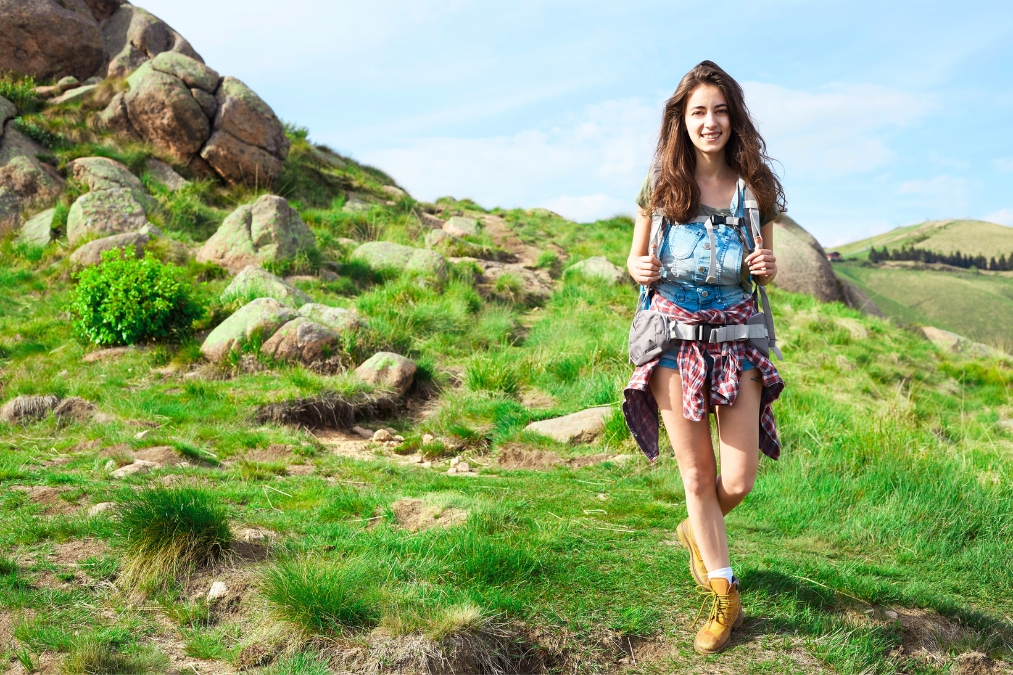
Grenada is renowned for its aromatic nutmeg plantations and the pristine sands of Grand Anse Beach, but its true character lies in its rugged, volcanic interior. This Caribbean gem has been shaped by thousands of years of tectonic shifts and eruptions, creating a dramatic landscape that offers a thrilling alternative to typical beach holidays.
The island's volcanic origins provide a unique opportunity to engage with its vibrant rainforest, nourished by the very minerals that once erupted from the earth. Adventurous travellers can explore cloud-shrouded peaks, hidden hot springs, and serene lakes formed from ancient craters. This guide encourages you to delve into Grenada's fiery heritage and explore the extraordinary experiences it offers beyond the traditional tourist path.
To truly understand the scale of Grenada’s volcanic past, you must ascend its highest point. Mount St. Catherine stands as a majestic sentinel in the north of the island, reaching an elevation of 840 metres. This is not merely a hill but the remains of the youngest and most dominant volcanic centre on the island.
For trekkers, reaching the summit is a badge of honour, as the mountain is often cloaked in thick mist and surrounded by a primary rainforest that feels largely untouched by time. The trek to the top of Mount St. Catherine is widely considered the most strenuous hike on the island. It requires a high level of physical fitness and a willingness to embrace the elements.
The trail typically begins in the parish of St. Mark, winding through bamboo groves and over steep, muddy ridges that test your balance at every turn. As you climb higher, the vegetation changes into a stunted elfin forest where trees are bent by the constant trade winds. The reward for the hike is a 360-degree view. On a clear day, the entire island unfolds beneath you, stretching from the jagged coastline to the distant Grenadine islands to the north.
Because the trails are often unmarked and subject to the whims of tropical growth, hiring a local guide is an absolute necessity. The mountain is home to razor grass, a sharp-edged plant that can easily slice through skin if you are not careful. A seasoned guide not only ensures you navigate the ridges safely but also provides essential context regarding the flora and fauna that thrive in this high-altitude volcanic ecosystem.
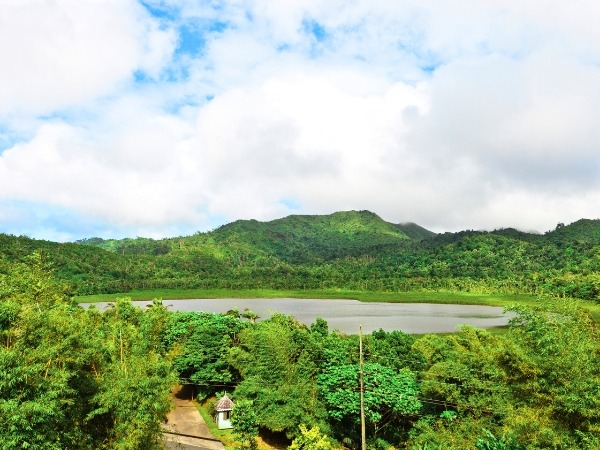
Moving south from the peaks of the north, the landscape shifts into the central highlands, home to the Grand Etang National Park. This area is perhaps the most famous example of Grenada’s volcanic history. At the centre of the park lies Grand Etang Lake, a 36-acre crater of an extinct volcano filled with cobalt water. The lake is surrounded by a lush perimeter of mahogany and ferns, creating a scene that feels more like a prehistoric jungle.
For those who prefer a moderate challenge, the hike to Mount Qua Qua is the perfect alternative. This trail follows the ridge of the crater, offering dramatic perspectives of the lake below and the hills that roll toward the Atlantic coast. The rich volcanic soil in this region supports a staggering array of flora and fauna. Tropical orchids and giant galingales decorate the path. Hikers should keep a keen eye out for the Mona monkeys, which have made the crater’s canopy their home.
Further north within the same volcanic complex lies Lake Antoine. Unlike the high-altitude Grand Etang, it is a shallow crater lake located at a lower elevation. Its calm waters and surrounding marshes make it a premier destination for birdwatchers. The area is a sanctuary for species such as the Snail Kite and the Fulvous Whistling Duck, illustrating how these ancient volcanic depressions have evolved into vital lifelines for the island’s biodiversity.
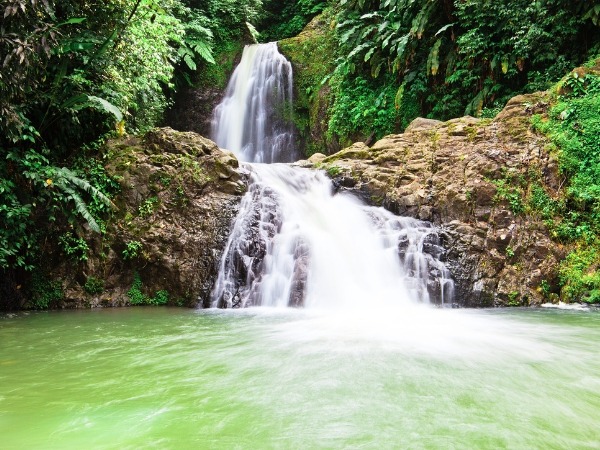
The volcanic legacy of Grenada is not only found in its heights but also in its waters. The island features rivers that have carved deep gorges through volcanic basalt, resulting in some of the most spectacular waterfalls in the Caribbean. The Seven Sisters Falls is a prime example, consisting of a series of tiered cascades tucked away in the rainforest. Its deep, cool pools are perfect for a refreshing swim after a hike through the forest.
For extreme explorers, the trek to Tufton Hall Waterfall offers a different level of intensity. Located in the north, this is the tallest waterfall in Grenada. Reaching it requires a journey over massive volcanic boulders and through riverbeds. It is a raw, unpolished experience that demands agility and a spirit of adventure.
Beyond the cold cascades, Grenada’s geothermal heat manifests in its natural hot springs. Clabony Hot Springs is a cherished local secret where mineral-rich waters are naturally heated by the earth’s internal fires. Soaking in these sulfurous pools is said to have therapeutic properties, offering a natural spa experience different from commercial resorts.
Similarly, the River Sallee Boiling Springs, located in the northern parish of St. Patrick, allow visitors to observe geothermal activity up close. Here, small vents bubble with hot, salty water, providing a direct connection to the volcanic energy that continues to simmer beneath the surface. You can enjoy a dip in the pool or rub the soothing earthy mixture on your skin.
Grenada’s volcanic story does not end at the shoreline; it extends deep into the Caribbean Sea. To the north of the main island lies Kick 'em Jenny, the most active submarine volcano in the region. While tourists cannot visit the volcano itself due to safety exclusion zones, its presence is felt in the geography of the northern coastline. The surrounding waters are rich with nutrients kicked up by geothermal activity, supporting a thriving marine environment that is a magnet for divers and researchers alike.
The influence of volcanic basalt is also visible on the island’s unique black sand beaches. While most visitors flock to the golden sands of the south, a trip to Black Bay offers a more dramatic aesthetic. Here, the sand is composed of finely eroded volcanic rock, creating a dark, shimmering coastline framed by jagged cliffs and sea caves. It is a quiet, atmospheric spot that feels worlds away from the bustling tourist hubs, perfect for those seeking solitude and a deeper connection to the island’s origins.
The underwater landscape of Grenada is further enriched by the interaction of volcanic history and human creativity. The Molinere Underwater Sculpture Park, though man-made, is situated on a seabed shaped by ancient volcanic flows. Divers and snorkelers can explore these hauntingly beautiful statues as they are slowly reclaimed by the sea. The volcanic rock provides a sturdy foundation for coral polyps to take hold, turning the sculptures into artificial reefs that teem with colourful fish, sponges, and sea fans.
Successfully navigating Grenada’s volcanic interior requires careful planning and a respect for the tropical environment. Choosing the right gear and equipment is also vital for a safe and enjoyable expedition. Here are essential tips for your trip.
The true soul of Grenada lies beyond its beautiful beaches. The volcanic landscape of the island offers a different kind of Caribbean magic, one that rewards curiosity and physical effort with breathtaking views and a profound sense of wonder. It is the foundation upon which everything else is built, from the towering rainforests to the fertile soil that produces the world’s finest spices.
To truly experience the island's geothermal heart, you need the freedom to explore beyond the resort gates and tourist paths. Take the wheel of your adventure and discover the raw beauty of the Spice Isle for yourself. Book your car on Final Rentals today and give yourself the power to reach misty summits and hidden springs. The fire of Grenada is waiting to be explored, and there is no better way to discover it than by hitting the open road.